Carlos A. Huang-Zhu
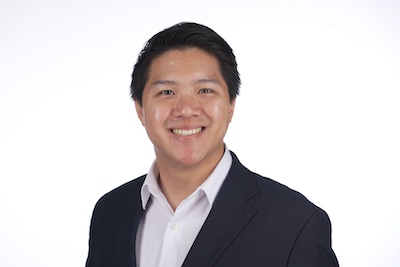
PhD candidate, Chemical Engineering
Faculty Advisor: Reid C. Van Lehn
Carlos is a PhD candidate whose research informs biomedical applications and chemical production. He grew up in Puerto Rico and graduated from the University of Puerto Rico – Mayagüez having also been a visiting scholar at Georgia Tech and Rutgers University, and a Manufacturing Engineering Co-op at AbbVie.
His doctoral research uses molecular dynamics simulations to model interactions between inorganic nanoparticles and model biological membranes. Using chemistry, Carlos influences the surface of a material to control how it interacts with biological molecules for drug delivery, biosensing, and other biomedical applications.
“One of the biggest challenges is trying to predict the interactions between nanomaterials and cellular membranes” Carlos said. “This challenge generally arises due to a limited mechanistic understanding from experimental data and to a very large design space.”
Carlos and his advisor, Reid C. Van Lehn, address this challenge by using computational methods to design and run simulations that show how these nanoparticles interact with cell membranes. This method allows them to study a larger variety of chemistries to explain why and how they interact, then correlate those data with trends in their experiments. Carlos has published one first-author paper with Van Lehn in Nanoscale and is co-first author on another two publications in ACS Nano and Langmuir.
While his work mainly focuses on biomedical applications, his computational design methods and research conclusions could also apply to developments in lipid-based vaccine therapies, detergents and surfactants for the chemical industry, and designing catalysts, to name a few.
Carlos received an Advanced Opportunity Fellowship in 2021. He said this support, along with a research assistantship he received, were fundamental in his success as a doctoral student. He said this funding allowed him to both pursue his own research interests and confidently grow his academic and professional skills.
“I was able to develop additional skills related to software engineering and high-performance computing, which improved how I performed my molecular simulations,” he said. “I even had the opportunity of supporting the acquisition of in-house computing resources, which was super fun and engaging.”
In fall 2022, he was awarded a training grant through the National Institutes of Health/National Institute of General Medical Sciences (NIH/NIGMS). The following spring, he received the National Science Foundation’s Graduate Research Fellowship. Both allowed him to continue doing impactful research while extending the visibility of his work.
“Having a Graduate School-supported fellowship did indeed help me secure additional funding opportunities,” Carlos noted. “In my applications, I always made sure to highlight it, mentioning how it had contributed to my academic and professional development.”
As an Advanced Opportunity Fellow (AOF), Carlos joined the Graduate Engineering Research Scholars (GERS) Community. He said AOF/GERS was one of the primary reasons he chose UW–Madison for graduate school, since the opportunity combined essential funding support and a top-tier community of scholars.
“From the very first moment I interacted with GERS, I felt welcome and I felt a sense of belonging, which, to me, were necessary to have in what I expected to be an arduous path. Being part of GERS and having the fellowship opened the doors to an amazing path full of growth that I never imagined was possible,” he said. “So thank you for making all of this a reality for me, and for many others.”